
What to Wear to an Indian Wedding: A Guest's Guide to Every Event
By Tionna M. Van Gundy, CSEP | Founder and Lead Planner, Wedicity
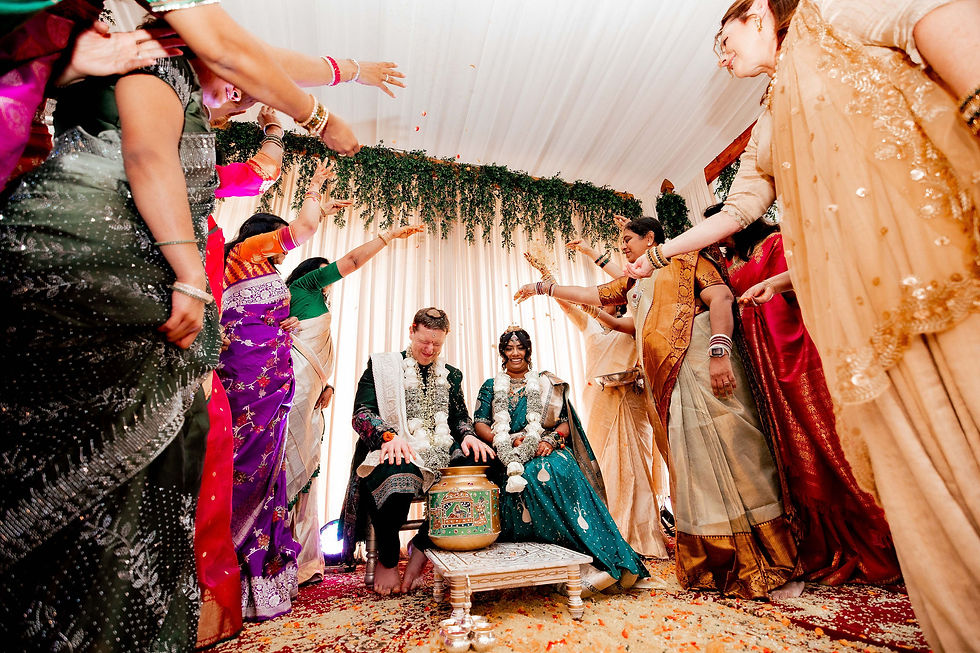
You have been invited to an Indian wedding; the invitation lists three events across two days, and you have no idea what to put on. That is a normal place to start, and asking the question already means you want to get it right.
This guide covers Indian wedding guest attire one event at a time: the mehndi, the haldi, the sangeet, the ceremony and the reception. It also covers the colors that carry meaning, what to leave at home, and what to do if you have never worn Indian clothing before. We plan Indian wedding celebrations in Chicago and beyond, and this is the advice we give guests every season.
Hold onto one thing as you read: every family and region is different. What follows is convention, not law. If the couple's wedding website says something else, the couple wins.
Start With the Invitation
The invitation is doing more work than it looks like. Read it for three things.
The event. A mehndi and a black-tie reception are not the same dress code, and most weekends include both.
The dress-code line. "Indian formal", "Indo-Western", "festive" and "black tie" each point somewhere specific. If a line like that exists, follow it.
The venue and the time. A 10am ceremony at a gurdwara asks for something different from a 9pm reception in a hotel ballroom.
If the couple built a wedding website, look there before you shop. Most now carry a dress-code note for each event, and it is the most reliable answer you will get. If there is nothing, ask someone in the wedding party. Nobody has ever been annoyed by a guest who wanted to dress correctly.
It also helps to know what to expect at a Hindu wedding before you choose an outfit, because the shape of the day drives what is comfortable to sit, stand and dance in.
What to Wear to the Pre-Wedding Events
These are the colorful, informal, genuinely fun events, and they are where most guests get the dress code wrong by overdressing. If you want an event-by-event outfit breakdown to shop from, there are good ones online; here is what actually matters on the day.
The Mehndi
Bright, light and easy to sit in. Henna takes time to apply and longer to dry, so you will be seated with your hands out of action for a while. Choose sleeves you can push up, a fabric that does not crease into a map, and nothing so long it drags. Greens, corals and prints all suit the mood. For men, a simple kurta pajama is right.
The Haldi
Wear yellow, and wear something you do not love. Turmeric paste is the entire point of the event and it stains permanently. Cotton and lightweight fabrics in yellow, mustard or marigold are exactly right. This is the one event where a cheap outfit is the correct choice.
The Sangeet
Dress to dance. The sangeet is a music and dance night, often with choreographed family performances, and you will be on your feet for hours. Jewel tones and metallics read beautifully under event lighting. Pick a lehenga or a pre-draped saree you can actually move in, or a modest evening gown, and wear shoes you can slip off when the floor fills up. A kurta with a Nehru jacket or a tailored sherwani works for men.

What to Wear to the Ceremony
This is the most formal and the most traditional event of the weekend, and the one where getting it wrong is most visible. Cover your shoulders and your knees. Reach for silk, brocade and the more elevated end of your options. Many ceremonies begin in the morning, so keep the finish daytime rather than evening.
A Hindu Ceremony
Ceremonies at a mandap can run long and are often partly outdoors. Dress for the weather you will actually be sitting in, and choose a drape you are not fighting for two hours. Shoes come off at many venues, so wear something you can step out of without sitting down.
A Sikh Ceremony
An Anand Karaj takes place in a gurdwara, where you cover your head and remove your shoes before entering the prayer hall. Bring your own scarf rather than assuming one will be available. The congregation is seated on a carpeted floor, so wear something that keeps your legs covered and lets you sit comfortably. Chairs are usually available for anyone who needs one.
Other Ceremonies
India is not one tradition. Muslim, Christian, Jain and regional ceremonies each carry their own expectations, and a South Indian ceremony reads color very differently from a North Indian one. If the invitation does not tell you and the wedding website does not either, ask. One message saves you the whole worry.
The guests who look most at ease are never the ones who spent the most. They are the ones who asked what the event actually involves and dressed for that. If you know you will be sitting on the floor for an hour, that tells you more about what to wear than any trend does. - Tionna M. Van Gundy, CSEP, Founder and Lead Planner, Wedicity
What to Wear to the Reception
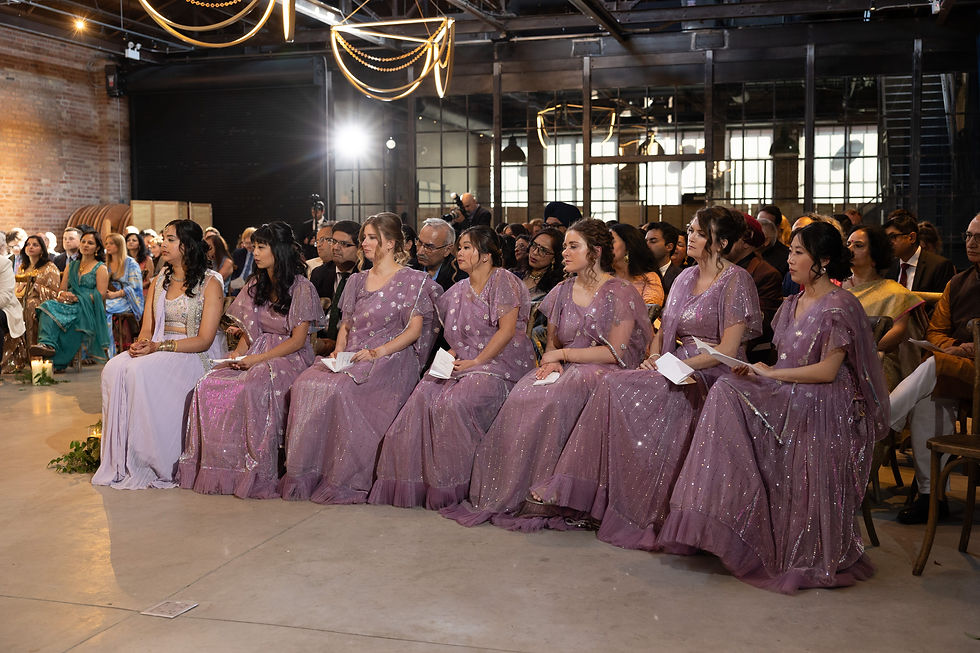
The reception is the most flexible event of the weekend and the one where Western formalwear is entirely at home. An embellished gown, a contemporary saree or a statement lehenga all work, and so does a well-cut suit or a formal kurta with a jacket. Metallics, champagne tones, deep jewel colors and modern pastels all photograph well under reception lighting.
If you are only renting or buying one Indian outfit for the whole weekend, this is not the event to spend it on. Save it for the sangeet or the ceremony, where the effort registers most.
Colors to Choose and Colors to Skip
Color carries meaning at an Indian wedding, and it is the part guests most often get wrong.
Red. Traditionally the bride's color on the wedding day. A guest in head-to-toe red reads as competing with her. Skip it at the ceremony; a red accent at the sangeet is usually fine.
White. Associated with mourning in Hindu tradition. Leave it off at the ceremony.
Black. Read as inauspicious by some families and worn happily by plenty of guests at receptions. If you cannot ask, keep it away from the ceremony.
Always welcome. Yellow at the haldi specifically, and green, coral, teal, emerald, royal blue, magenta, orange, pink and gold anywhere across the weekend.
These are conventions rather than universal rules, and they do move. South Indian and Christian Indian weddings often treat white completely differently. When you cannot ask anyone, a jewel tone is never the wrong answer.

First Time Wearing Indian Clothing? Start Here
Wear it. Guests who are invited to an Indian wedding are invited into the whole celebration, and dressing the part is read as respect and effort, not as costume. A few practical notes.
Rent or borrow. You do not need to buy. Rental services and a generous friend cover most guests, and a borrowed outfit that fits beats a bought one that does not.
Get it tailored. A blouse or kurta that has been taken in is the single biggest difference between looking dressed and looking borrowed. Budget for it.
Practice the drape. If you are wearing a saree for the first time, practice the drape or book someone to do it. Do not learn on the morning of the ceremony.
Western formal is fine too. A suit, or a cocktail dress at a respectable length, is welcome at every event. Nobody is counting.
What Not to Wear to an Indian Wedding
Head-to-toe red, white or black at the ceremony.
Anything you cannot sit on the floor in for an hour.
Shoes with buckles or laces, at any event where shoes come off.
Strapless or very short at a religious ceremony.
Something you have never moved in. Wear it around the house first.
Your best white outfit at the haldi. The turmeric will win.
Frequently Asked Questions About Indian Wedding Guest Attire
Q: Can I wear Indian clothing if I'm not Indian?
Yes, and you will almost certainly be welcomed for it. Guests who are invited to an Indian wedding are invited into the celebration, clothing included. Rent or borrow if you don't want to buy, get the fit adjusted, and wear it with the confidence that you made an effort.
Q: Can a guest wear red to an Indian wedding?
Not to the ceremony. Red is traditionally the bride's color on the wedding day, and a guest in full red reads as competing with her. A red accent at the sangeet or reception is usually fine. If you love the dress, save it for a different event.
Q: Is black acceptable at an Indian wedding?
It depends on the family. Some read black as inauspicious for a ceremony; plenty of guests wear it to a reception without a second thought. If you can't ask, skip black at the ceremony and keep it for the reception.
Q: What should men wear to an Indian wedding?
A kurta pajama for the daytime events, a sherwani or a kurta with a Nehru jacket for the sangeet and ceremony, and a tailored suit or a formal kurta with a jacket for the reception. A well-cut suit is acceptable at every event if Indian clothing isn't an option.
Q: Do I need a different outfit for every event?
For a full weekend, yes. Most Indian weddings run three to five events with genuinely different dress codes, and one outfit will not cover a haldi and a black-tie reception. Renting one or two of them keeps the cost sensible.
Q: What do I wear to a ceremony at a gurdwara or a temple?
Cover your head and remove your shoes, and choose something that covers your legs, because you will be seated on the floor. Bring your own scarf rather than relying on one being available.
About the Author
Tionna M. Van Gundy, CSEP, is the founder and lead planner at Wedicity, a Chicago-based luxury wedding planning and design studio. With more than fifteen years in hospitality and events, she has planned multi-day Indian wedding celebrations for families from a wide range of cultural backgrounds across Chicago and beyond. Tionna holds the Certified Special Events Professional (CSEP) designation and has been featured in Destination I Do, Style Me Pretty and Chicago Style Weddings. [EDITOR: add LinkedIn URL.]
Planning a wedding weekend of your own and want your guests to arrive knowing exactly what to wear? That is part of what we do. Our Indian wedding planning team builds the weekend, the dress-code guidance and every event in an Indian wedding weekend around your family, at Chicago wedding venues and destinations further afield. Take a look at the Wedicity experience, then let's talk.


Comments